



Changed the IP and still got associated: you are guarding against only one of the layers, not all of them
After Store A was throttled, you switched Store B to a separate proxy IP, cleared the cookies, and logged in again. Three days later, B also received an association notice.
This result is not contradictory. Association determination is not a single-variable switch of “same IP means associated, different IP means safe”; it looks at multiple sets of shared variables in combination. Changing the IP only touches the network egress layer; as long as the other three layers are still reused across stores, the association path still holds.
Compared with shelf platforms such as Amazon and Shopify, TikTok Shop has one extra layer in its determination criteriacontent and interaction traces: account persona, the publishing cadence of short videos and livestreams, creator collaboration records, and customer service script templates are all counted toward account identity. Treating TikTok multi-store as “listing a few more store links” to operate usually starts running into problems by the second or third store — TikTok multi-store is a vertical persona matrix, not the same growth logic as platforms that horizontally replicate categories; this point inDifferences in Multi-Store Growth Paths Between Temu and TikTok ShopBreak it down further.
Platforms will not disclose the determination weights and thresholds. Any claim that “configure it this way and it definitely won’t be linked” is not credible. When you receive a notice, first rely on the account notification and official policy to confirm which type of variable was read, and then make changes.
Four-Layer Shared Variable Comparison: Which Layer Differs Between TikTok Shop and Amazon and Shopify
Once you break “anti-association” down into four layers of variables, you can quickly see which layer you have a gap in. The table below is an operational-level comparison and does not involve any platform’s internal rules.
| Variable Layer | Typical Shared Items | Behavior on TikTok Shop | Differences from Amazon / Shopify |
|---|---|---|---|
| Network Egress | Proxy IP, egress region, IP segment type (data center / residential) | When the egress region is inconsistent with the store’s operating region or content delivery region, it can easily trigger secondary verification. | Amazon also values matching the IP to the registered location; Shopify often only traces back when a review is triggered. |
| Browser and device environment | Cookie, localStorage, fingerprint parameters, logging in to multiple stores with the same Profile | A same-origin environment can cause multiple stores to be read as the same set of operations | Similar to Amazon, but TikTok also factors in post-login content operation behavior |
| Identity and financial information | Business license entity, legal representative, registered mobile number, receiving account, return address | When qualification or receiving information is duplicated, a clear link emerges between stores | Amazon is more granular in its assessment at the receiving and identity levels, while TikTok Shop is equally sensitive to entity reuse |
| Content and operation traces | Persona, posting cadence, creator roster, customer service scripts, login time distribution | This is a layer that TikTok Shop separately includes in its assessment, and changing the IP cannot cover it at all | The layer with the greatest difference; other shelf platforms do not focus their assessment on this layer |
This table isn’t meant to make you guess how the platform calculates scores; it’s meant to remind you of one specific thing: Layer 4 is unique to TikTok Shop, while only the first 3 layers overlap with experience from Amazon and Shopify. If you copy an old platform’s isolation checklist as-is, this is exactly the layer you’ll miss. The granularity of the criteria for the first 3 layers is in theitem-by-item breakdown of Amazon store anti-association, where you’ll find a more detailed comparison.

The three details most easily treated as 'small things'
- Qualification entity: Multiple stores under the same business license naturally have duplicate entity information; more commonly, different entities share the same registered phone number, return address, or customer service email. This kind of crossover doesn’t cause problems immediately, but when one store is required to go through secondary verification, another store is often pulled into review at the same time. The judgment criterion is straightforward—place the registration materials of two stores side by side and see how many identical fields you can find.
- Receiving account: Binding one receiving account to multiple stores is the most frequent form of reuse. Even if the entities differ, the IPs differ, and the browser environment is clean, as long as the settlement account and bank card are duplicated, a cross-store record is left at the funds layer. Setting up independent receiving information for each store is more worth doing first than buying another IP.
- Content and customer service footprint: Multiple stores reuse the same set of video templates, the same batch of creators, and the same customer service scripts, and their publishing and reply rhythms are also highly synchronized. The criterion isn’t 'whether they look alike,' but 'whether there is a field that is independent for each of the two stores'—at least one of the following must be separate: persona, product selection, creator list, or script library.
Troubleshooting order: start with the layer with the smallest contamination radius
When expanding from 4 stores to 5 stores, Cookie domains, proxy cooldown periods, and team operation logs will all come under pressure at the same time. Therefore, the troubleshooting order follows the contamination radius from smallest to largest: first change the low-cost, low-impact items, then move on to the records layer.
- First, look at content and customer service trails.Open the backends of two stores and compare the influencer collaboration lists and customer service quick replies. If there are duplicate lists, separate them first. This layer has the smallest contamination radius and is also the fastest to change.
- Next, check the browser environment.Confirm whether each store has an independent Profile and whether local storage and Cookies are shared across stores. Logging in to two stores one after another on a single computer is the most common and lowest-cost way to reuse. For specific isolation standards, seeKey Points for E-Commerce Multi-Account Environment Isolation.
- Then verify the network egress.Check whether each store's proxy is fixed, whether it is shared with other stores, and whether the egress region matches the store's operating region. Frequent proxy changes are themselves also a type of abnormal signal.
- Finally, handle identity and funding records.Compare the business entity, legal representative, registered phone number, receiving account, and return address item by item. This layer has the highest change cost and is most likely to be delayed until the end, but it is precisely the layer with the thickest correlation line.
- Leave a buffer before expanding stores.Each additional store adds another level of complexity to the environment layer and team operation logs. For a pre-expansion troubleshooting checklist, you can refer toMulti-Store Operations: Failure Points and Solutions.
The most overlooked link in multi-person collaboration: login credentials and asset permissions
A team sharing one set of backend accounts is the most common practice and the link most likely to leave same-source records. When three operators share the same store account to log in, the device, IP, and time distribution in the login logs are all mixed together, and when an issue arises, no one can determine who operated which account in which environment.
A more reliable approach is to use the platform's official member and permission system: TikTok Business Center distinguishes access scope through Admin, Standard Member, and Finance roles, assigning asset permissions by job role rather than sharing login credentials (official documentation:Business Center Roles and Permissions. For details on how to set up permissions, you can start with theCreate a Business Centerofficial steps. At the same time, also make sure that your operating methods comply withAdvertiser Account PolicyRequirements for authenticity and platform processes—no matter how finely permissions are split, they do not replace compliant operations. The minimum configuration for cross-platform team collaboration is inMulti-Store Account Isolation and Team Collaboration in Practicethere is a complete comparison.
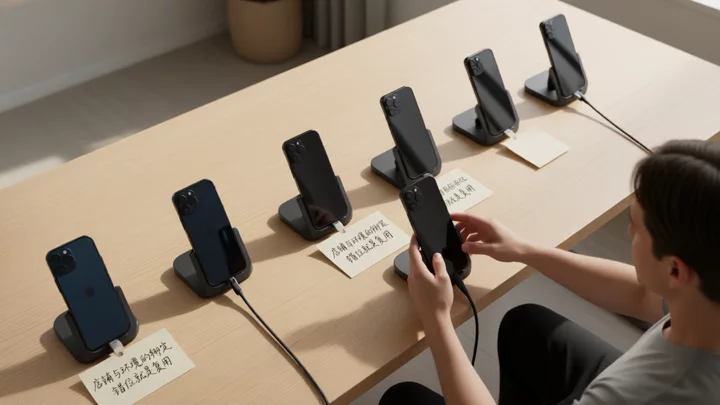
Once the binding relationship is wrong even once, all previous efforts are wasted: if Store A's Profile logs in once using Store B's proxy, these two lines cross. Daily switching can be simplified into one rule—first select the store, then open the corresponding Profile; the proxy is already fixed in the Profile, so do not change it on the fly. For which layer the fingerprint browser can actually cover and how to make trade-offs among configuration items, seeEnvironment Isolation and Proxy Configuration Guide. It addresses the browser environment layer; it does not change the business license entity, nor does it change the receiving account.
Frequently Asked Questions
Can simply giving each store an independent IP solve the association problem?
It cannot be solved on its own. IP only covers the network egress layer; if the qualification entity, receiving account, and content and customer service footprint—these three layers—continue to be reused, the association path still exists. IP is one necessary condition, not all of it.
If different stores use the same person's receiving account, will there be problems?
Duplicated payment information forms a clear cross-store record. Whether it triggers enforcement depends on the platform's combination of criteria at that time, and platforms do not disclose their thresholds. What is certain is that this is the lowest-cost type of reuse and the first one that should be dismantled.
If I use an anti-detect browser, do I still need to manage qualifications and payment collection?
Yes. An anti-detect browser solves isolation at the browser environment layer, reducing the sharing of Cookies and fingerprint parameters. It does not change the business license entity, does not change the payment collection account, and cannot replace genuine qualifications and compliant operations.
At which store number do I need to stop and run a full check?
There is no universal number. A more practical signal is: after adding a new store, you start frequently receiving secondary verification, activity applications get rejected, or a store's content performance suddenly drops a tier. When such signals appear, go through all four layers completely: network exit, browser environment, identity and funds, and content footprint.